
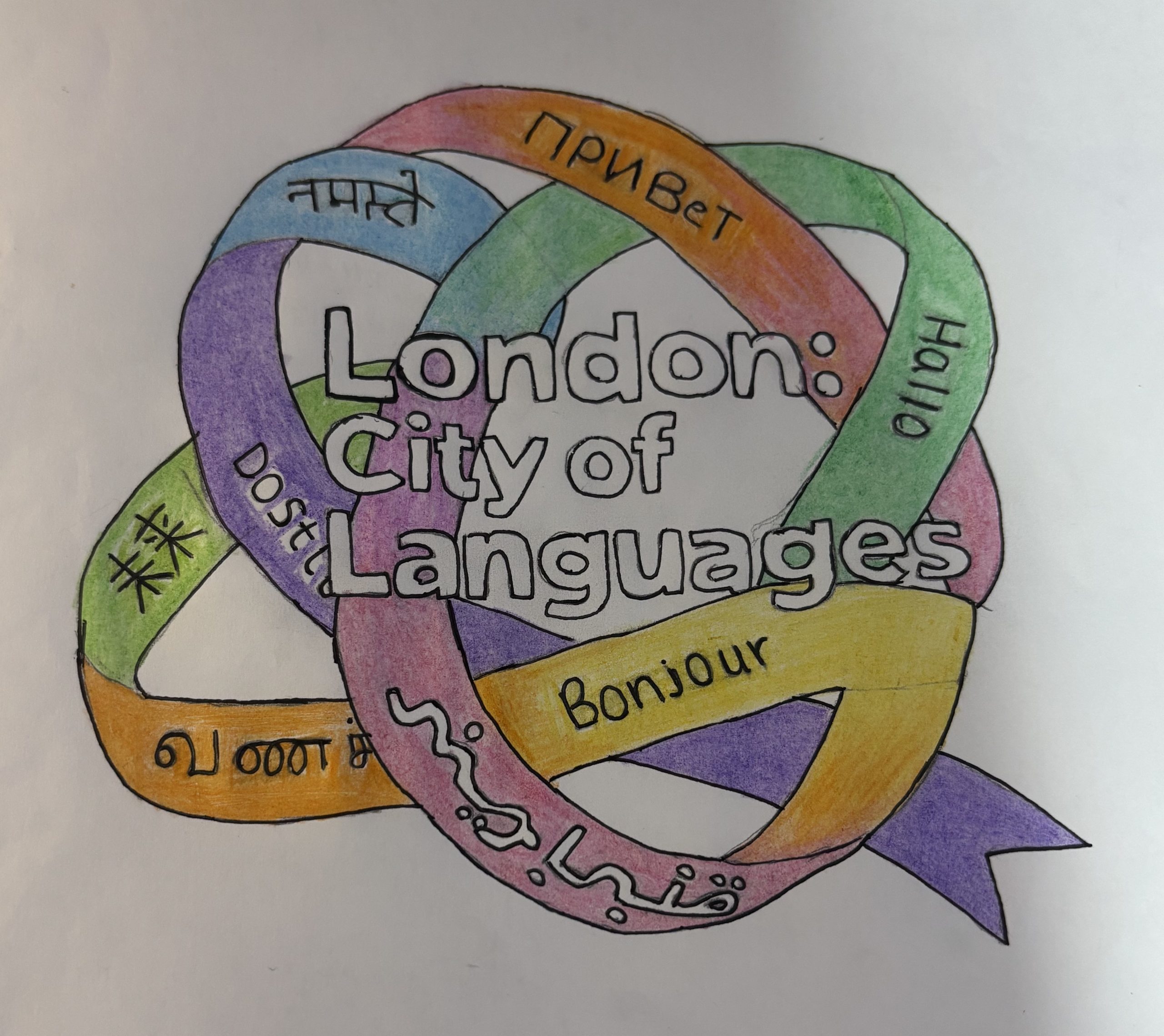
🎯 Introduction: What is London City of Languages?
London is one of the most linguistically vibrant cities in the world — a place where hundreds of languages are spoken, learned, shared, and celebrated every day.
London City of Languages (LCoL) brings this richness to the forefront by championing the languages used across our communities, schools, colleges, universities, workplaces, and cultural institutions.
Our aim is simple:
- to celebrate London’s extraordinary language diversity
- to inspire people of all ages to learn and enjoy languages
- to engage families, schools, and communities in supporting language education
Whether you’re part of a school, a business, a community group, or simply someone who loves languages, there are countless ways to get involved.
From May to July, we will be shining a spotlight on activities and events as part of our London City of Languages: Festival of Language – and we would love you to be part of it!
🌍 Who Can Get Involved?
Anyone can take part, including:
- Education: Early Years, Primary, Secondary, Further, Higher, Adult, Third Age; mainstream and supplementary
- Institutions: cultural, arts, humanities, sciences
- Civic and political organisations: councils, libraries, community centres
- Businesses and employers
- Individuals (including aspiring influencers!)
🗓️ When?
- LCoL is a year‑round initiative
- Special focus: May–July Festival of Language
📍 Where?
- In person / Online / Hybrid
🚀 How to Get Involved
This is your quick‑start guide:
- Advertise the initiative / campaign; spread the word about the campaign
- Join existing LCoL‑badged events [see this page]
- Promote what you already do
- Create new activities
- Collaborate with others
📚 Resources
- LCoL site: https://londoncityoflanguages.org.uk/
- British Council: https://www.britishcouncil.org/school-resources/languages
- Languages Gateway: https://www.thelanguagesgateway.uk/
- Lightning Languages (Twinkl): https://www.twinkl.co.uk/resources/twinkl-partnerships/cities-of-languages-partnerships
💡What Can You Do?
💡 Ten Activities to Start the Ball Rolling
1. 📣 Advertise
What you could do: Promote LCoL opportunities and encourage participation.
Example: Showcase the Poster Competition and display entries in your space.
Resources: LCoL activity page: info sheet + PPT
2. 🎤 Presentation / Talk
What you could do: Share why languages matter in your context.
Example: Deliver an assembly at school, staff briefing with colleagues, or a community talk.
Resources: ALL “Why Study Languages?”
3. 🎨 Create a Display
What you could do: Celebrate languages visually in your setting.
Example: Build a Language Identity Wall featuring all languages spoken in your space.
Resources:Resources: LL Display Pack
4. 🌟 Celebrate Your Community
What you could do: Highlight the linguistic skills of staff, learners, families, or community members.
Example: Bulletin feature; video introductions; social media posts (#LondonCityOfLanguages).
Resources:Resources: LL Display pack
5. 🎧 Create Audio / Video
What you could do: Capture multilingual voices and stories.
Example: “A Day in My Language” videos; staff introductions; multilingual phrase clips.
Resources: LCoL audio/video project – launching May
6. 🏆 Competition / Challenge / Quiz
What you could do: Create a fun challenge linked to languages.
Example: Duolingo contest; pub quiz; BC Great Languages Challenge; LL board game.
Resources: LL Activity Pack; LL Boardgame; BC Great Languages Challenge ; LCoL Duolingo guide
7. 🎭 Themed Session / Day / Week
What you could do: Explore a cultural or linguistic theme.
Example: Music, theatre, dance, books, food, calligraphy, crafts, games; visits or show‑and‑tell.
Resources: LCoL Design an Arabic Tile; BC EDoL resources
8. 🌍 Discover New Languages
What you could do: Offer taster sessions or revive dormant skills.
Example: Teach greetings, songs, rhymes, politeness phrases, phonics contrasts.
Resources: LCoL Taster Guide
9. 🚶 Beyond Your Setting
What you could do: Organise an external visit or invite a guest speaker.
Example: Museum, cinema, cultural centre, library, partner school.
Resources: e.g. BC webinar ‘Where will languages take me?’
10. 🤝 Collaborate
What you could do: Partner with others to amplify impact.
Example: Joint events with supplementary schools; shared workshops; cross‑interest collaborations.
Resources:Language Ambassadors Case Study
🧭 Suggestions for Different Settings
All Settings
- Co‑badge an existing event
Already planning something? Turn it into an LCoL event.
Example: End‑of‑term Culture Days
https://ncle.ucl.ac.uk/culture-days-with-european-languages/ - Use ready‑made resources
Run an assembly or classroom activity using resources such as the British Council’s European Day of Languages materials:
https://www.britishcouncil.org/school-resources/languages/european-day-languages - Run a themed session or club
Conversation classes or discovery sessions (e.g. poetry, song, dance, food, film, or music). - Set a languages challenge
Use the British Council Great Languages Challenge as a homework activity:
https://www.britishcouncil.org/school-resources/find/classroom/great-languages-challenge - Join existing events
Explore the LCoL festival schedule add a link and participate in activities already planned. - Host your own event or assembly Encourage participants to showcase their linguistic skills and invite families and the wider community.
- Celebrate staff language skills Encourage staff to share languages they speak via email signatures, tutor time, or displays.
- Run competitions and enrichment activities
Explore opportunities from the Languages Gateway:
https://www.thelanguagesgateway.uk/explore/types/enrichment-competitions-awards-alt-qualifications/
Primary Schools – emphasis on family engagement and play
The Lightning Languages resource packs provide a wealth of resources especially suitable for Primary.
https://www.twinkl.co.uk/resources/twinkl-partnerships/cities-of-languages-partnerships
- Work with supplementary schools – Strengthen links with community language education.
- Invite families into school – Parents/carers share stories in their home languages.
- Run a whole‑school Culture Day https://ncle.ucl.ac.uk/culture-days-with-european-languages/
- Set up a Language Café – Pupils practise ordering food in another language.
- Learn songs and dances – Simple and engaging ways to experience another language.
- Play games in another language – Use basic phrases such as “your turn”, “start”, and “stop”.
Secondary Schools – lively and student‑led
Collaborate with supplementary (Saturday) schools
Partner with local community language schools attended by your pupils.
- Language Ambassadors
Enable enthusiastic linguists to deliver taster sessions in feeder primary schools. - Show and Tell presentations
Pupils present on a randomly assigned country, language, or culture. - Organise a Culture Day
https://ncle.ucl.ac.uk/culture-days-with-european-languages/ - Run a Duolingo competition
Reward progress based on XP, time spent, or vocabulary learned. - Create language quizzes
Students design interactive quizzes on languages, cultures, or countries. - Design a language-focused walking tour
Pupils create a local or London-based tour highlighting linguistic landmarks (e.g. using Google Maps). - Organise cultural trips
Visit cultural centres such as Institut Français, Goethe-Institut, or embassy libraries, musuems and cinemas.
Supplementary (Saturday / Community / Heritage) Schools
- Host celebration events
Invite families and the community. - “Proud of My Language” showcase
Students present poetry, drama, or projects in their heritage language with bilingual elements. - Create exhibitions
Include migration stories, recipes, proverbs, calligraphy, and community history. - Run student-led talks
TED-style presentations on “Why My Language Matters”. - Intergenerational storytelling
Invite older community members to share stories. - Collaborate with mainstream schools
Joint events and shared learning opportunities. - Submit student-created content
Short videos such as “A Day in My Language” for LCOL.
Cross‑Sector Collaboration
Mainstream schools are encouraged to take the lead.
- Identify local supplementary schools and build partnerships.
- Co-create:
- Language taster sessions led by heritage learners (see guide on the LCoL site)
- Cultural workshops (e.g. calligraphy, music, food, dance)
- Joint assemblies on multilingualism
- Invite heritage learners to act as Language Ambassadors.
- Develop a shared Language Identity Wall showcasing all languages spoken.
- Strengthen mutual understanding between mainstream and supplementary education.
Businesses and Employers
- Celebrate workplace languages
Share the languages spoken by employees on social media. Use our hashtag #LondonCityofLanguages - Host a multilingual event
Celebrate with food and cultural activities. - Promote language skills
Highlight the value of multilingual employees. - Engage with schools
Offer guest speakers to discuss careers and the importance of languages. - Collaborate locally
Restaurants and community businesses can support campaigns and events.
Higher Education (Universities & Language Centres)
- Run outreach sessions
Deliver language and culture workshops for schools. - Create a “Language Zone”
Offer activities such as:
Language tasters
Cultural workshops (origami, crafts, etc.)
Film nights and exchanges - Partner with cultural institutions to run or host an event
Libraries, museums, cinemas, bookshops, and music venues. - Work with community groups
Arts, sports, volunteering, and local organisations. - Organise academic talks
Use postgraduate students and networks. - Collaborate across departments
(e.g. Music, History, Science). - Co-badge existing university events
Include lectures, concerts, and public events under LCoL.
I
Featured Image: Thanks to Venuja, Plashet School